
B2B sales development in Poland — a system that delivers clients predictably
We build sales funnels, define your Ideal Customer Profile, implement CRM, and train sales teams. Instead of random leads and referral-to-referral chains — a structured B2B client acquisition process that works on the Polish market.
3–6 month engagement
B2B focus only
EN · PL · UA
Book a free sales audit
When does a B2B company in Poland genuinely need sales development?
Most B2B companies entering Poland start sales through introductions. The founder knows someone, that someone refers others, the business grows organically — for the first 2–3 years, this works. The problem starts later, when referrals stop being enough to sustain growth, and the company has no other reliable way to acquire clients.
B2B sales development in Poland is not about hiring one salesperson and hoping for the best. It’s a structural rebuild of how the company finds, qualifies, and closes deals with business clients. A system that can be repeated, measured, and scaled.
Which signals tell you it’s time to rebuild sales?
!
Over 70% of new clients come from referrals. No other stable acquisition channel exists.
!
Sales depend on the founder — without their involvement, deals don’t close.
!
Every lead is handled differently. No process, no playbook, no standards.
!
Nobody in the company knows the cost of acquiring a customer or the conversion rate.
!
The sales cycle takes months and keeps getting longer. Clients “are thinking about it.”
!
The CRM is empty or used inconsistently. Data lives in salespeople’s heads.
If any of these describe your situation in Poland, it’s not yet a crisis. But if the goal is to double revenue in a year or expand into adjacent EU markets, the absence of a sales system becomes the primary constraint on growth.
Which companies do we work with most often?
Every company is at a different stage. Three scenarios cover most of our engagements in Poland:
The referral-driven company
Revenue between EUR 250K and 1.2M annually, sales run by the founder. Goal: build the first version of a sales system that doesn’t depend on one person.
The growing company
Revenue EUR 1.2M–6M, a sales team exists, but processes are chaotic. Goal: structure the funnel, implement CRM, introduce measurable sales KPIs.
The stagnating company
Stable EUR 2.5M–12M, but no growth for 2–3 years. Goal: identify the source of stagnation — positioning, ICP, channels, team structure — and rebuild the strategy.
What does building a B2B sales system in Poland actually include?
A B2B sales system is not one element but a coherent set of processes, tools, and documents. Depending on client needs, we work on some or all of the following:
Ideal Customer Profile (ICP)
Defining the most profitable customer segment. Industry, company size, buying situation, decision-maker. Without ICP, every marketing initiative is blind shooting.
Positioning and value proposition
Why a client should buy from you instead of competitors. Communication that resonates with the specific ICP — not generic marketing slogans.
Sales funnel
The customer journey map: from first contact to closed deal. Stages, qualification criteria, actions at each step, definitions of success.
Client acquisition channels
Channel selection matched to ICP — outbound, content, partnerships, events, paid. Each channel has measurable cost and conversion.
Sales materials
Pitch deck, proposal templates, case studies, meeting presentations. Standardisation — every team member communicates the same company value.
CRM and automation
CRM selection and configuration, automation of repetitive tasks, integrations with mailing and telephony. Real-time pipeline visibility.
Sales playbooks and conversation processes
Discovery calls, demos, negotiations, objection handling, closing. Playbooks are the starting point — reps adapt them over time, but the baseline must exist.
KPIs and reporting
Funnel stage conversion, sales cycle length, customer acquisition cost (CAC), customer lifetime value (LTV). Numbers that drive decisions.
Want to know where leads leak in your sales funnel?
We start with a free 60-minute conversational audit — we walk through your current sales process and identify the three biggest areas for improvement.
How does the engagement work step by step?
A full B2B sales system build typically takes 3–6 months. The audit alone is 3–4 weeks. Depending on scope, we are engaged 4–8 hours per week, with more intensive work during implementation phases.
1
Current sales audit
We analyse processes, lead sources, CRM data, sales materials, and interview the team. We identify funnel leakage points — where and why the company loses clients.
3–4 weeks
2
ICP and positioning definition
We select the most profitable customer segment. We define their problems, decision-makers, buying criteria, and how the company should communicate its value.
2–3 weeks
3
Sales funnel and materials design
Funnel stages, qualification criteria, conversation playbooks, pitch deck, proposal templates, case studies. All aligned with the new positioning.
3–4 weeks
4
CRM and automation implementation
CRM configuration (Pipedrive, HubSpot, or alternative), automation of repetitive tasks, integrations, pipeline reports. Historical data migration.
2–4 weeks
5
Sales team training
Working with sales reps on the new process. Playbooks, demos, objections, negotiations, closing. Practical sessions, role-play, recording and analysing real calls.
2–3 weeks
6
Operationalisation and control
First 30/60/90 days with the new system. Weekly KPI reviews, process adjustments, sales leader mentoring. Full documentation handover.
3 months
How does a company with a sales system differ from one without?
The difference is not just numerical. It’s about how the company makes decisions and handles market unpredictability.
Swipe to see full table
| Dimension | Without sales system | With B2B sales system |
|---|---|---|
| Client source | Referrals, coincidence | Measurable channels with calculable cost |
| People dependency | Founder closes everything | Process repeatable with a new rep |
| Revenue forecast | “We’ll see how it goes” | Pipeline shows revenue 60–90 days ahead |
| Response to lead drop | Panic, ad-hoc actions | Data diagnosis, channel correction |
| New sales rep onboarding | 3–6 months of chaos | 4–6 weeks to first deal |
| Strategic decisions | Founder’s intuition | Funnel numbers and deal history |
Who is behind the work
the nech is led by Dmytro Nechyporenko — a B2B advisor with 19 years of experience working with companies in Poland, Ukraine, the EU, Canada, and the UAE. Specialises in building B2B sales systems and market expansion strategy.
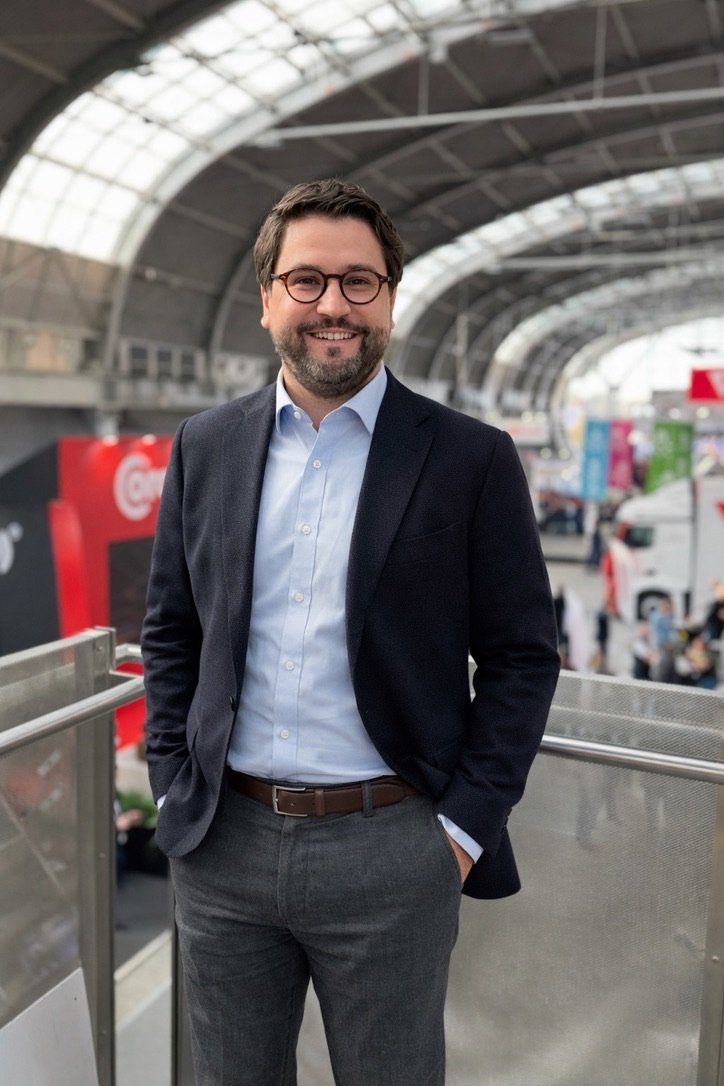
Dmytro Nechyporenko
Founder · B2B Advisor
Has worked with companies across construction, energy, technology, e-commerce, SaaS, and professional services. Clients include Ostapiv Dachy, Voltage Group, and Repulos.
Practical approach — instead of frameworks and methodologies, focuses on what actually works in the Polish B2B market. Fluency in three languages (English, Polish, Ukrainian) enables work with both local and international clients.
Frequently asked questions
How much does B2B sales development in Poland cost?
Pricing depends on project scope. A sales audit is typically EUR 1,200–2,500. Full B2B sales system development (audit, ICP, funnel, CRM, training) is a 3–6 month project in the range of EUR 7,000–18,000. Retainer advisory (interim sales leadership) is billed monthly from EUR 1,200.
Exact pricing is provided after the conversational audit, once the scope of work is clear.
How long does B2B sales system implementation take?
The audit alone takes 3–4 weeks. Full system implementation is a 3–6 month project. The first measurable effects (higher-quality leads, better conversion) appear after 8–12 weeks. Scaling and optimisation is continuous work — some clients continue in a retainer model.
Do you guarantee a specific sales increase?
No. No honest consultant guarantees a specific percentage increase. Sales depend on product quality, market conditions, team engagement, and many other variables outside our control.
We do guarantee work quality, measurable process KPIs (sales cycle length, funnel stage conversion, customer acquisition cost), and full transparency on results. Every client knows what specifically changed and how we measure it.
Do we need to have a sales team already?
No. We work with both companies that have established sales teams and those where sales is run by the founder alone. For smaller operations, we build a system that one person can run — without requiring immediate sales hires. As the company grows, the system is ready for first recruitments.
Which industries do you work with most often?
Our deepest experience is in B2B professional services, technology, manufacturing, energy, and construction. We also work with B2B e-commerce and SaaS. We do not work with B2C — this is a deliberate specialisation choice that lets us be genuinely good at one type of sales.
Do you work with international companies that haven’t entered Poland yet?
Yes. For companies entering Poland, sales development typically starts after the initial market entry decision is made. We combine sales system design with practical execution — including local sales hires, first commercial contracts, and initial pipeline build.
For pre-entry work — market analysis, entry-model selection — see our Polish Market Entry service.
What do we need to prepare to start working together?
Access to historical sales data (if available), information about current clients, tools in use (CRM, mailing, telephony), and availability of key people — typically the founder and the person responsible for sales.
Lack of historical data does not block the project but extends the audit phase — instead of analysing existing numbers, we work more through interviews and observation.
What happens after the project ends?
The client receives full system documentation, playbooks, templates, and processes. Some clients continue in a retainer model (team mentoring, monthly KPI reviews, strategy adjustments). Others take full ownership of the system and operate independently.
The decision always belongs to the client — the project goal is operational independence, not consultant dependency.
Related services
Ready to bring order to your B2B sales?
The first call is free and no-commitment. 60 minutes of conversational audit during which we’ll identify the three biggest areas for improvement in your sales process.