How buyers choose an energy storage manufacturer in Poland and Ukraine
We recently spent a morning at Kehua’s office in Warsaw, and it left us with one question: how do clients in this region actually decide which energy storage manufacturer to trust with a project. The answer is not a single scorecard. Whether it is an energy storage Poland project or one across the border in Ukraine, buyers look at broadly the same equipment, yet they weigh it against very different priorities. This article is about how that decision is really made on each side of the border, and why a manufacturer that treats the two markets as one loses in both.
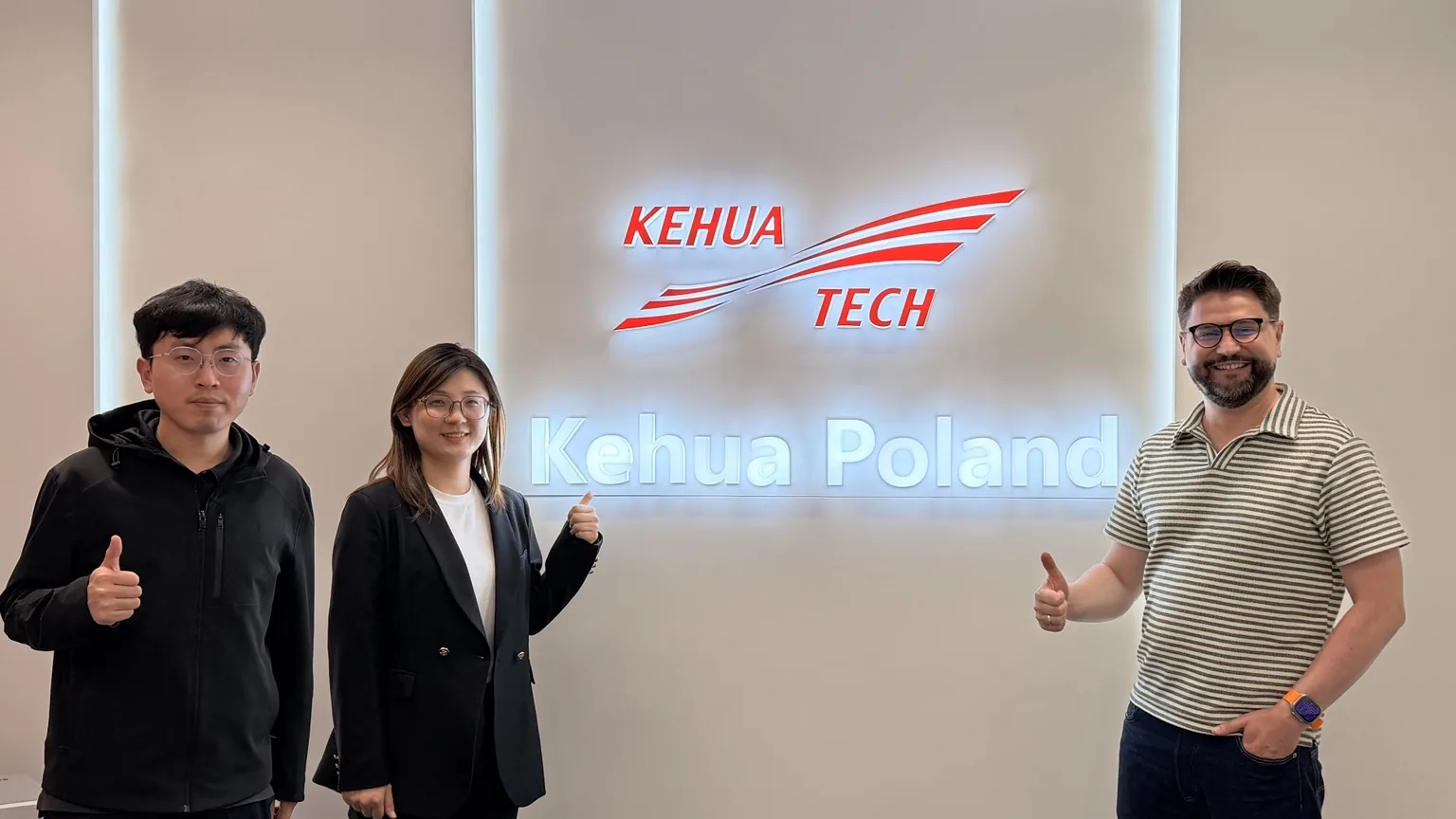
Kehua is a useful lens for this, because it is exactly the kind of manufacturer a serious buyer now has to evaluate: large, credentialed, and still new to many procurement teams in Europe. The company was founded in 1988 and has been listed on the Shenzhen Stock Exchange since 2010, under ticker 002335. It reports more than 68 GW of solar installations and more than 53 GW of energy storage deployed worldwide by the end of 2025. Independent bodies have placed it near the top of its category: S&P Global ranked it first in the world for power conversion systems above 500 kW, and BloombergNEF lists it as a Tier 1 energy storage supplier. On the inverter side the company is recognised in BloombergNEF’s bankability work as a top ten brand, which is a different and more modest claim than a Tier 1 inverter label, and one worth keeping precise. In grid forming storage, the segment that helps weak grids stay stable, Kehua reports more than 10 GW deployed and more than 400 microgrid systems.
We list those credentials not as an endorsement but because they are, in effect, the checklist a buyer runs through: scale of deployment, independent rankings, bankability, certifications and capability in the hard segments like grid forming. A manufacturer either has these proof points or it does not. What changes from one market to the next is not the checklist itself, but how heavily each item is weighted, and that is where Poland and Ukraine part ways.
What do buyers actually check when choosing a BESS equipment manufacturer?
Strip away the sales language and the buyer of a battery energy storage system is testing a manufacturer against a fairly stable set of criteria. The first is a proven track record at the right scale: not a datasheet, but installed, grid connected references on projects comparable to the one at hand. The second is independent validation, the rankings and bankability assessments from bodies like S&P Global and BloombergNEF that let a financier or an insurer take the manufacturer seriously. The third is certification and standards compliance, which is the price of entry rather than a differentiator. The fourth is technical fit, above all grid forming capability where the connection point is weak, plus efficiency, warranty terms and round trip performance.
Then come the criteria that decide most real tenders once the shortlist is technically sound. Local service presence and spare parts availability, because a fleet of inverters is only as good as the response time when one fails. Supply chain and origin, which increasingly interacts with how a project is funded. And, finally, price and commercial terms, which matter but rarely win on their own once a project is large enough to be financed rather than bought outright. Every buyer weighs all of these. The difference between markets is the order in which they are weighed.
Who the buyer is shifts the order as much as where they sit. A financial investor or a fund starts from bankability and independent validation, because their exit and their lenders depend on it. A utility leans on proven references and long term service commitments, since it will live with the asset for fifteen years or more. An EPC contractor cares intensely about delivery certainty, documentation and how easily the equipment integrates on site, because schedule risk is their risk. A developer sits in the middle, balancing what the financier will accept against what the site and the timeline allow. The same manufacturer, with the same credentials, is therefore judged differently depending on who is holding the scorecard, which is why a single generic pitch rarely lands with everyone in the room.
How do clients in Poland choose an energy storage supplier?
The energy storage Poland opportunity
Poland is scaling storage from pilot volumes to grid scale in a single cycle. Installed battery capacity is projected to grow from roughly 0.4 GW at the end of 2025 to around 1.3 GW by the end of 2026, and analysts see the trajectory continuing well beyond that toward the end of the decade, according to S&P Global Commodity Insights. Much of that build out leans on public support: the National Fund for Environmental Protection and Water Management, known by its Polish acronym NFOSiGW, has backed contracts covering close to 3.9 GW and 14.5 GWh of capacity. This is the energy storage Poland opportunity that has drawn developers, EPC contractors and investors from across the EU and beyond.
Because so many Polish projects run on public or borrowed money, the buyer here leads with bankability and eligibility. The first questions a Polish developer or EPC asks a manufacturer are whether the equipment will satisfy the financier, whether its origin fits the conditions attached to the chosen funding route, and whether there are installed references that a lender recognises. Only then does the conversation move to price and delivery. Certification, warranty strength and local service sit alongside as qualifiers. A manufacturer like Kehua answers part of this with a concrete Polish reference: a 37 MW solar plant in Myslowice, built for the utility Tauron on reclaimed industrial land, came online in February 2024 using Kehua inverters, as the first stage of a larger planned build out. For a Polish buyer, an installed utility grade project in country carries more weight than any brochure.
How do clients in Ukraine choose an energy storage supplier?
Cross the border and the same equipment is bought to answer a different question. The dominant driver of Ukrainian demand is not subsidy eligibility or price arbitrage. It is continuity: keeping critical load running when the grid is under physical strain. That single shift in purpose reorders the buying criteria. Backup duration and robustness move to the top. Delivery speed and the certainty of getting spare parts and service under difficult conditions matter enormously. Origin and funding conditions, which sit so high in the Polish list, carry far less weight here. Continuity is just as central for manufacturers choosing a production site in one of the industrial parks in Ukraine.
The route to market reflects those priorities. Rather than a local subsidiary of the kind Kehua established in Warsaw, manufacturers typically reach Ukrainian buyers through distributors and EPC partners who can promise availability and hands on support. Solar Invest Group, for example, positions itself as an official supplier of Kehua industrial inverters and storage systems in the country. And the projects are real: Helios Strategia is building a plant in the Zakarpattia region combining roughly 22.35 MW of solar with a 33.44 MWh battery system, scheduled for 2026, with storage supplied by Jinko ESS together with Kehua Tech. Same manufacturer, same broad product family as in Poland, but a buyer choosing it for resilience first and paperwork second.
How should international buyers evaluate a BESS manufacturer across Poland and Ukraine?
For developers, EPC firms, investors and procurement teams working both markets, the practical takeaway is to fix the weighting before scoring the manufacturer. Start by naming the project’s primary driver. In Poland it is usually financeability and eligibility for the funding route. In Ukraine it is usually continuity and service. That single decision reorders everything that follows.
With the driver fixed, run the same underlying checklist but in the order the market demands. For a Polish project, front load bankability, installed references a lender recognises, certification and origin fit, then technical performance, local service and price. For a Ukrainian project, front load backup duration, robustness, delivery certainty and service reach, then technical performance and commercial terms. A manufacturer like Kehua can score well on both lists, but only if it is presented against the criteria that market actually cares about, not a single global pitch.
Finally, refuse the single price list. A manufacturer serving both Poland and Ukraine, or a buyer sourcing for both, needs two distinct cases. In Poland the winning argument is bankability, compliant sourcing and references. In Ukraine it is resilience, backup duration and service continuity under difficult conditions. The equipment can be identical. The way it is chosen, and the way it should be sold, cannot be.
Choosing a storage supplier, or entering Poland and Ukraine?
We help international companies turn supplier selection and market entry into a clear plan: which manufacturers fit which market, how buyers in Poland and Ukraine actually decide, and how to build a commercial story that fits the market instead of fighting it. If you are shortlisting BESS suppliers or planning expansion across the region, we can help you make the strategic call, not just the technical one.
Explore how we work on Polish market entry, market expansion strategy and business strategy, or take the direct route below.
Book a consultationAbout the author
Dima V. Nechyporenko is the founder of the nech, a boutique B2B consulting firm based in Warsaw. He advises international companies on market entry, B2B sales development and expansion across Poland, the EU and Ukraine, with a focus on the energy, renewables, construction and manufacturing sectors. His work centres on the practical, hands on side of growth: turning regulatory shifts and market complexity into decisions a business can act on.
Disclaimer. This article is published by the nech for general information and discussion only. It reflects our reading of publicly reported market and regulatory developments as of July 2026 and may become outdated as rules and programmes evolve. It is not legal, financial, regulatory, tax or investment advice, and it does not create any advisory or contractual relationship. References to Kehua and to any other company, product, project or public body are provided for context and do not constitute an endorsement or a statement of fact about any specific offering. Figures and claims attributed to third parties, including manufacturers, analysts and public institutions, are their own and have not been independently verified by the nech. Before making any procurement, financing, sourcing or market entry decision, obtain advice from qualified professionals and confirm the current requirements with the relevant authorities and financing institutions.