How to Get Your First B2B Clients in Poland

Winning your first B2B clients in Poland is the hardest part of the whole expansion — and the part almost nobody prepares for.
Most foreign companies I talk to have the entry part figured out before they call me. The company is registered, there is a Polish bank account, an accountant is on retainer, maybe an office address in Warsaw. On paper, they have “entered Poland.”
Then three, four, five months pass — and there are still no clients.
This is the gap almost nobody prepares for. Setting up a legal entity is a solved problem; any decent law firm does it in a week. Winning your first paying customer in a market where nobody has heard of you, in a language you may not speak, against local competitors who have been there for twenty years — that is the actual hard part. And it is the part that decides whether your expansion to Poland becomes a P&L line or a write-off.
I have worked on both sides of this: helping foreign companies land their first clients here, and helping Polish companies do the same thing in other markets. What follows is the approach I actually use with founders and sales leaders — not the theory, but the sequence that gets you from zero to a reference customer.
Why your first B2B clients in Poland are the hardest to win
The instinct most companies bring to Poland is to copy what worked at home. If paid ads and inbound built the pipeline in Germany or the US, the plan is to switch on the same channels in Polish. If the model back home was “hire one salesperson and let them run,” that is what gets tried here too.
It rarely works, for three reasons.
You have no proof. In your home market you have logos, case studies, references a prospect can call. In Poland you have none of that on day one. A Polish B2B buyer is conservative and risk-aware — they are not going to be your guinea pig because your website says you are a market leader somewhere they have never been.
You are probably overestimating English. Poland has plenty of English speakers, but B2B selling happens in Polish. The decision-maker at a mid-sized manufacturer or distributor is far more comfortable, far more candid, and far more likely to sign when the whole conversation is in their language. Prospecting in Polish versus English is not a small difference — in my experience it is the difference between a 5% and a 30% reply rate on the same list.
You are treating “first clients” as a scale problem. Ads, SDR teams, and marketing automation are how you scale a channel that already converts. Your first ten clients are not a scale problem — they are a proof-and-trust problem. Different tools entirely.
The mindset: won one relationship at a time
Your goal in the first months is not “pipeline.” It is one reference-able win — a Polish client who is happy, who will take a reference call, and whose logo you can put on your site. Everything before that first proof point is manual, narrow, and personal. That is not a failure of strategy; it is the strategy. Here is the sequence I use.
1. Narrow the target until it is uncomfortable
Foreign companies almost always start too broad — “B2B companies in Poland,” “manufacturers,” “the SME market.” That is unsellable when you have no local proof.
Pick one narrow, describable segment where you have the strongest possible story: a specific industry, a specific company size, a specific problem you have already solved for a near-identical company abroad. When you can say “we did exactly this for a company just like yours in your sector,” a cold Polish prospect has a reason to take the meeting. For the first phase you want a target list you can literally name — 60 to 100 specific companies, not a market segment.
2. Build the named list from real Polish sources
You do not need expensive data to build that list. Poland has more usable public information than most markets:
- KRS and CEIDGThe national company registers — legal form, board members, and who really runs each company.
- LinkedInStill the single best tool for identifying and reaching Polish B2B decision-makers, who are active on it.
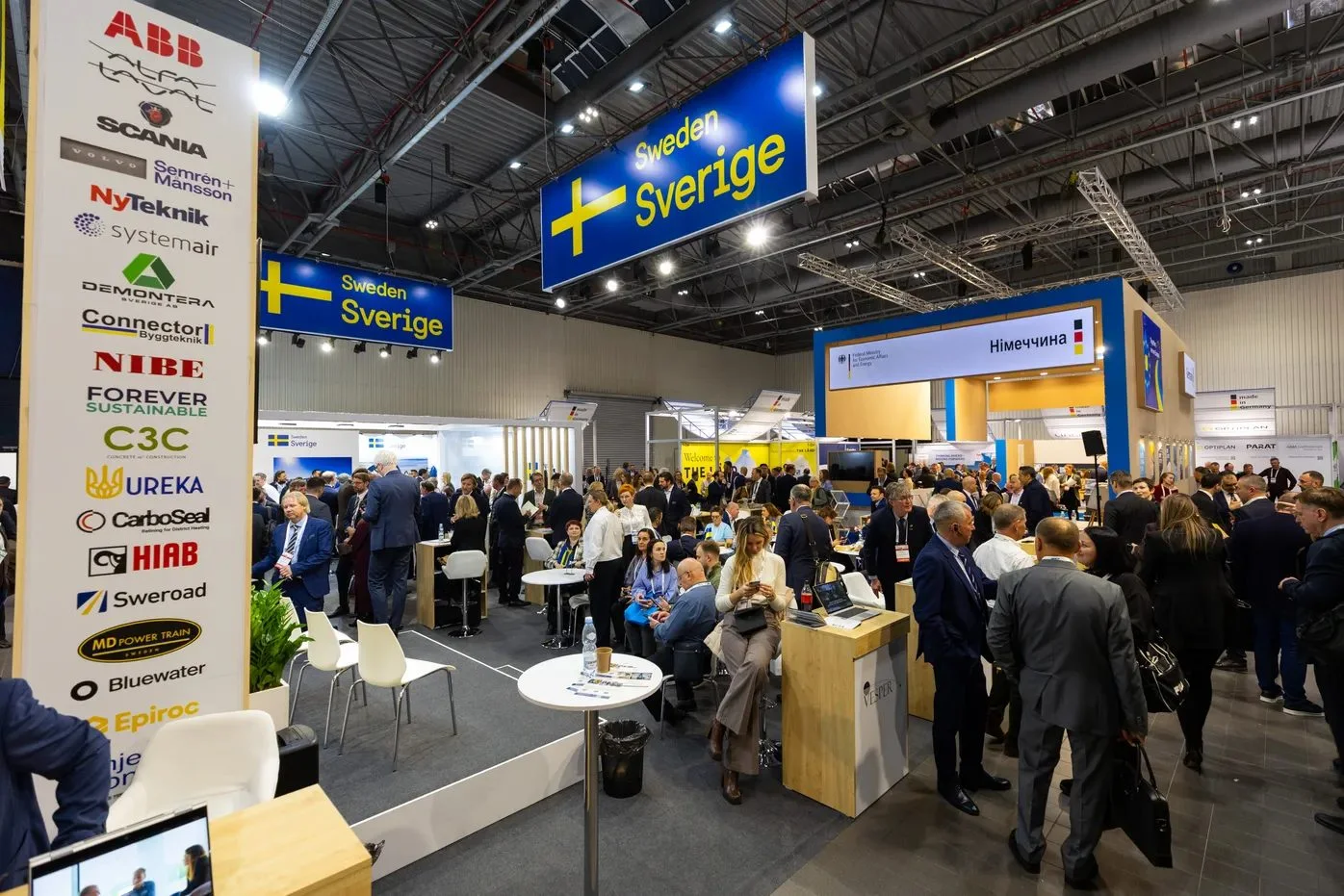
- Trade fairs & associationsA booked hall of exhibitors is a pre-qualified list of companies actively spending money to grow.
The output of this step is a spreadsheet of named companies and named people, not a vague “addressable market.”
3. Reach out in Polish, like a person, not a campaign
This is where most foreign outbound dies. The generic English template that gets a 2% reply in your home market gets a 0% reply here. For the first clients, every message should look hand-written and be in Polish: a specific reason you are contacting this company, a one-line reference to a comparable result you have delivered, and a low-pressure ask for a short conversation — not a demo, not a pitch.
If nobody on your team writes natural business Polish, this is the first thing to fix — through a local hire, a partner, or someone who does it as part of the engagement. Do not run first-client outreach through machine translation; Polish buyers spot it instantly, and it reads as “this company is not really here.”
4. Make the first meeting about them, and de-risk the first deal
When you get the meeting, resist the urge to present. Ask how they buy, who else is involved, and what would have to be true for them to work with a foreign supplier. You are learning the local buying process as much as selling.
Because you have no local track record, lower the risk of saying yes. A paid pilot, a tightly-scoped first project, a clear “here is exactly what you get and by when” — anything that lets a cautious Polish buyer test you without betting the relationship. Your first client is buying a promise from an unknown; make the promise small and specific enough to be easy to accept. This is where disciplined B2B sales development earns its keep.
5. Give it a realistic runway
Winning your first B2B clients in Poland is a focused push — a named list of about 80 companies, worked properly in Polish — realistically produces something like 15 to 20 real conversations over about three months, and from those your first one or two deals. That is a normal, healthy shape. The companies that fail here are almost always the ones that expected inbound leads in month one, got discouraged, and pulled the plug before the sequence had time to work.
What this looks like in practice
One pattern I have seen repeatedly: a technically excellent foreign company, a strong product, and a stalled Poland launch — because the plan was “run our English playbook and hope.” No local proof, English-only outreach, one overloaded salesperson covering the whole country.
The fix is not more budget. It is narrowing to a single segment where the company had a strong analogous result abroad, rebuilding the target list from KRS and LinkedIn into around 80 named accounts, switching all first-touch outreach into natural Polish, and structuring the first engagement as a small, well-defined paid pilot so the first Polish client can say yes without much risk. That first reference win unlocks everything after it — the second and third clients come far faster once there is one local logo and one Polish buyer willing to take a reference call.
The mistakes that cost the most
- Waiting for inboundContent and ads matter later. Your first clients come from deliberate, named outbound.
- English-only outreachIt quietly halves your response rate and signals you are not really committed to the market.
- Too broad, too soon“Everyone in Poland” converts nobody. One narrow segment with a strong analog wins the first logo.
- Pulling out too earlyThree months of disciplined outreach beats three months of scattered experiments abandoned in week six.
- No local proof planIf you have not planned how to get your first reference customer, you have a Poland registration, not a go-to-market.
Getting started
Entering Poland is the easy half. Turning that entry into your first B2B clients in Poland is the half that actually determines the return on the whole move — and it is very winnable with the right, focused approach.
Ready to win your first B2B clients in Poland?
If you are past the setup stage and now facing the real question — where the first Polish clients actually come from — that is exactly the work I do with companies.
Book a short conversation→ Work with me on Poland market entry