Expansion · B2B
Entering a new market is decided by live conversations, not by data
Entering a new market usually starts from a report. The trouble is that everyone has the same numbers in it: market size, competitors, regulation, pricing. All of it can be assembled in an evening. The knowledge that actually decides the outcome is not filed anywhere. It sits in the heads of people who work that market every day, and it only comes out in conversation.
Dima V. Nechyporenko · the nech · August 2026 · 9 min read

- Conversation set
- 20–25 over 8–10 weeks
- Who to talk to
- buyers, partners, industry observers
- Working languages
- Polish, English, Ukrainian
- Experience
- Poland, EU, Ukraine, Canada, UAE
Last updated: August 2026
In short
Entering a new market in short
Analysis gives you numbers your competitor can access just as easily. The difference comes from live conversations with real people in the market: the ones who buy here, sell here, and have watched deals be won and lost. Entering a new market is built on what those people tell you, and then on whether your company keeps the contact alive until it opens its own presence.
- Fact 01Anyone can find market size, competitors and regulation in one evening. Nobody can find out why one particular company has not changed supplier in five years, because it was never written down.
- Fact 02The working scope we use before deciding on entering a new market: 20–25 live conversations over 8–10 weeks, across three groups of people who work that market.
- Fact 03A local team is needed earlier than a legal entity and an office. Registering a company builds no relationships. Regular contact does.
- Fact 04Continuous presence works when the same person returns to the same people over several months, not when a company shows up once at a trade fair.
- Fact 05The most expensive mistake is not bad analysis. It is silence after the first meeting. Contact without follow-up closes doors harder than no contact at all.
- Fact 06Polish is not a formal requirement, but in B2B sales it sets the pace. In Polish the conversation starts with the topic. In English it starts with a barrier.
Definition
Entering a new market is the planned process of starting sales in a country where a company has neither customers nor structure yet. It covers market analysis, testing assumptions in live conversations with people who work that market, building relationships with partners and customers, and maintaining presence until a local entity and team are in place.
01Starting point
Why analysis alone is not enough for entering a new market
Market analysis shows that an opportunity exists. It does not show whether anyone will buy from you specifically. Those are two different things, and only one of them can be established from behind a desk.
Start from a simple observation. The same report you commissioned can be commissioned by your competitor. The same databases, the same public registers, the same industry reviews, and now the same chatbot that will summarise all of it in half an hour. Market data has stopped being an advantage, because everyone holds an identical copy of it. What remains an advantage is the part that is not on the internet at all.
The typical sequence looks like this. A company commissions a report and receives market size, a competitor list, pricing and regulatory data. The board reads it, the numbers add up, the entry decision is made. Then comes a year in which nothing happens: sales do not move, partners do not reply, and the report is still correct. It was correct back then too. It simply answered a different question.
A report describes the market as a structure. B2B sales happen inside specific relationships between specific people. Until you have spoken to the ones who make purchasing decisions in your category, you are working on assumptions: that the problem is urgent, that the current solution is not good enough, that the budget sits where you think it does, that the buying cycle takes as long as you planned. Each of those assumptions can be disproved by a single conversation, and confirmed only by twenty.
That is why we treat Poland market entry as one process rather than two separate stages. Analysis generates hypotheses. Conversations test them. The decision comes after the second step.
02The gap
What is not on the internet but sits in people’s heads
The things that matter most about a market are published nowhere, because nobody has an interest in publishing them. No report explains why deals fail to happen, and that is usually what blocks entering a new market. Six things below come out in conversation and appear in no source at all.
- Who actually decides. In mid-sized Polish companies the purchasing decision often sits with the owner or the operations director, not with the procurement desk you are sending your offer to.
- Why the incumbent supplier feels safe. Usually not because they are cheaper, but because when something breaks at 6pm someone picks up the phone and drives over.
- What the buying calendar looks like. In construction, energy and manufacturing, decisions cluster in cycles that annual data does not reveal.
- What disqualifies a foreign supplier. No local service, no references from Poland, no invoice in PLN, slow response times.
- What the real price is. A competitor’s price list and the transaction price are two different numbers, and only the buyer knows the gap.
- Who works with whom. The map of informal ties between companies, integrators and distributors does not exist in any database.
Entering a new market breaks on exactly these details, and nobody is deliberately hiding them. It simply never gets written down, because to people in the market it is daily obviousness rather than insight. They talk about it openly, as long as the conversation is not a sales pitch in the first sentence. The condition is that you ask in their language, from the position of someone who wants to understand rather than close.
03Who to talk to
Exactly who to talk to before entering a new market
Three groups of people who work that market every day, in a ratio of roughly 10 to 7 to 5. Each sees the market from its own side and answers a different question. Skipping any of them leaves a hole no amount of desk research will fill.
Group A · approx. 10 conversations
Potential customers
Companies matching your target profile, ideally ones that bought something in your category in the past two years. You ask about their buying process, their criteria, their current supplier, and what would have to happen for them to switch. Not whether they like your product.
Group B · approx. 7 conversations
Potential partners
Distributors, integrators, contractors, engineering firms, complementary suppliers. They see the market from the supply side and know where the current players run out of capacity. Often they are the ones who bring in the first customer.
Group C · approx. 5 conversations
Industry observers
Industry people with no stake in the deal: former managers at competitors, sector consultants, chambers of commerce, trade journalists, adjacent service providers. They say things a party to the transaction will not.
How to reach these people in Poland
Four routes work in parallel: direct LinkedIn outreach written in Polish, a referral from someone who already knows you in that market, presence at two or three sector conferences per season, and industry chambers and clusters, which in Poland are genuinely active and happy to connect companies. Cold calling works too, but second in line, after the company name has appeared somewhere first.
Formal verification of the other party happens before the meeting, not after. The KRS register shows ownership structure and legal representation, the VAT white list confirms tax status and the bank account, and the filed accounts show scale. Five minutes of work that saves a quarter.
04Process
Entering a new market: how to test assumptions in eight weeks
Conversations only pay off if you wrote down beforehand what exactly you are trying to disprove. Otherwise twenty meetings leave you with twenty opinions and zero decisions.
-
Week 0: write the assumptions down
Four to six sentences, each of them testable. Example: “manufacturers with 50–250 employees switch component suppliers when lead time exceeds six weeks.” A sentence like “the Polish market is attractive” cannot be tested.
-
Week 1: a list of 60 names
Names, not companies. Each one tagged as group A, B or C, with the source of the contact and the person who can introduce you. Conversion to a meeting from a well-written first message in Polish is typically 30–40 percent.
-
Weeks 2–7: the conversations
Three to five per week, 30–45 minutes each, the same set of open questions. The conversation is research, not sales. Materials go out afterwards, never before.
-
After each one: a note within 24 hours
Three fields: what confirms the assumption, what contradicts it, what is new. The note goes back to the other person as a short summary. That is the first proof that your company is serious.
-
Week 8: review the assumptions
Each assumption gets a status: confirmed, disproved, unresolved. Disproved ones are the most valuable, because they save budget. Unresolved ones mean you spoke to the wrong group.
-
Week 9: decision and entry plan
Three possible outcomes: enter as planned, enter with a changed customer profile or offer, do not enter now. The third is also a result, and it costs a fraction of a failed sales year.
Eight weeks is not an academic exercise. At the end of it you have not only answers but thirty people in the market who know who you are and what you do. That is a real asset no report provides, and the starting point for B2B sales development in Poland.
05Partners
Entering a new market: how strategic partners decide to join you
A partner does not choose a product. A partner chooses a company they are confident will not disappear in six months. That confidence either forms or fails to form in the first three conversations.
In Poland’s industrial, construction and energy sectors, entering through a partner is usually faster than building your own sales function from zero. The partner already has the relationships, the references and the credibility a newcomer lacks. In return they expect something that surprises many foreign companies: not a discount, but availability.
The questions a partner asks themselves after you leave the meeting sound roughly like this. Will there be someone to speak Polish with when a customer calls with a problem. Will an email be answered within a day or within a week. Will this company still be here in two years, or is this a market test that ends in a quiet withdrawal. Will I get exclusivity, and if not, on what terms will I compete with others.
None of that can be answered in a deck. It is answered by the rhythm of contact: a specific note after the first meeting, someone coming back a month later with progress, the same person appearing next quarter rather than another new face from headquarters. That is why we start partner conversations only when a company is ready to sustain that rhythm. A partner conversation followed by silence closes the door harder than never having had it.
If you are building presence in several countries at once, it pays to run them on one logic, as described in our market expansion strategy work, rather than as three independent experiments.
06Presence
Entering a new market: a local team before you open an office
A year or two usually passes between the entry decision and the office opening. It is the most fragile period, and most companies leave it empty.
The market does not pause during that time. The people you spoke to change jobs, competitors sign contracts, and the memory of a company that appeared at a trade fair in March fades around June. A local team, even one or two people, fills that gap and does four things headquarters in another country cannot.
- It understands the context. It knows how a public tender differs from a private order, what payment terms look like in the sector, and when not to call.
- It speaks the local language. This is not about translation. It is that the conversation starts with the topic instead of a polite negotiation about which language everyone will struggle in.
- It keeps contact continuous. The same person returns to the same people every few weeks with something concrete, not with “any news yet?”.
- It builds continuous presence. The company stays visible in the market without interruption: in conversations, at industry events, in referrals, before it even has an address there.
That effect produces three outcomes that translate directly into first contracts. First, credibility: market players take seriously a company they are in regular contact with, not one that shows up once a quarter. Second, proof of intent: sustained presence costs money, so the fact that you maintain it signals to a partner that the entry decision is real. Third, access to information: people share opportunities with whoever happens to be on their mind.
The order is the reverse of what many companies assume. Presence and relationships first, entity and office second. Registering a Polish company takes a few days and builds not a single relationship. Opening an office before building a network means paying rent, payroll and accounting while waiting for sales to catch up with costs.
07Models
Entering a new market: three models of presence
The choice between your own hire, an agency and a partner on the ground depends on whether your assumptions are already confirmed. Before validation, any hire is a bet on an uncertain outcome, because nobody yet knows what that person should be looking for.
| Model | When it works | What it requires | Main risk |
|---|---|---|---|
| Your own country manager | Once the market is validated, there is a first customer base and a sales target worth measuring. | A working sales process and someone at HQ to onboard them | Hiring takes 3–4 months and onboarding another 3. A bad choice costs a year. |
| Marketing or lead generation agency | Once the offer and messaging are settled and you need volume of contact. | Settled messaging and a confirmed customer profile | It delivers contacts, not relationships. With an unconfirmed profile it generates traffic that does not convert. |
| A partner on the ground | During validation and the first relationships, when one accountable person in the market is what is missing. | Decisiveness at HQ and access to the product team | Without decisions from the company side, even a good partner stalls. |
Entering a new market almost never rests on a single model. The models are not mutually exclusive. The sequence that usually works: a partner on the ground during validation, then your own hire, and an agency only once you know who to approach and with what.
08Timing
How long entering a new market takes
From decision to first contract usually takes 6 to 12 months. In long-cycle sectors such as energy or infrastructure, 12 to 24. Companies that budget this as a quarter withdraw exactly when the relationships start to work.
| Stage | Duration | What it leaves behind |
|---|---|---|
| Analysis and hypotheses | 2–3 weeks | Four to six testable assumptions and a list of names to talk to |
| Validation conversations | 8–10 weeks | 20–25 conversations, an assumption review, a partner map, thirty people who know who you are |
| Profile and offer correction | 2–4 weeks | A narrowed customer profile, materials and commercial terms in Polish |
| First commercial talks and pilots | 3–6 months | First partners ready to work, first reference deployments |
| Structure decision | after the first contracts | Entity, team and office launched once there is something to serve |
Entering a new market rarely fits into a single quarter. Indicative timing for the Polish market. The stages overlap: validation conversations do not stop when selling starts, they change character.
09Mistakes
Seven communication mistakes when entering a new market
- A sales conversation instead of a research one. The first sentence about your product closes the other person down. Ask about their process and about what last let them down in a supplier.
- Silence after the first meeting. The most common and most expensive mistake. Contact without follow-up is worse than no contact, because it confirms the fear that the company is only probing the market.
- Rotating contact people. Three different people from headquarters across three quarters tells a partner that nobody owns this market internally.
- Materials in English only. A deck will pass, but offers, terms and technical specifications in Polish cut weeks off the decision cycle.
- Talking only to customers. Skipping partners and industry observers gives you a picture of demand without a picture of how the market actually operates.
- No written record. Without notes after each conversation, eight weeks later you are left with an impression rather than material for a decision.
- Opening structure before the first customers. An entity, an office and headcount before confirmed sales means fixed costs switched on at the least certain moment.
10In practice
Entering a new market in practice
Across energy and industrial projects, including work with Voltage Group on development in European Union markets, the sequence was the same every time. First, conversations with contractors, engineering firms and investors, to understand how the decision process actually works in that country and who really signs. Only then the offer and commercial terms, shaped by what we heard.
Six months of presence instead of a one-off campaign
A company entering the Polish B2B market starts with twenty-odd conversations across three groups. Along the way it usually turns out that the original customer profile was one segment too wide, and that the biggest opening sits with partners rather than end customers. After the profile changes, the same person carries the contact for the following months: short summaries, progress updates, presence at two industry events.
The effect is not that a contract suddenly appears. The effect is that after six months the company is inside the set of suppliers considered when a purchase comes up. Without this stage it is not in that set at all, regardless of product quality.
The same mechanism runs in the other direction, in business development in Poland for companies that have been here for years but are moving into a new segment. A new segment is a new market for them, with its own set of people to talk to and its own assumptions to disprove.
11Metrics
Entering a new market: how to measure whether communication works
Before the first sale you measure the quality of your access to the market, not revenue. These indicators show up early and tell you whether the direction is right.
| Indicator | What we treat as good | What a lower result means |
|---|---|---|
| Outreach to meeting conversion | 30–40 percent for Polish-language outreach with a referral | Wrong selection of people or a poorly written first message |
| Conversations with a second meeting | at least 1 in 4 | The topic does not touch a real problem of the person you are talking to |
| Onward referrals | 1 in 5 people introduces someone else | The conversation reads as sales rather than expertise |
| Assumptions resolved | 4 out of 5 after eight weeks | The assumptions were written too broadly |
| Partners ready for a pilot | 2–3 out of a group of seven | No continuity of contact, or unclear terms of cooperation |
Entering a new market is measured by these indicators long before the first deal. Working values from projects in the Polish market. In long sales-cycle sectors such as energy or infrastructure the timelines double while the ratios hold.
12FAQ
Frequently asked questions about entering a new market
How many conversations are enough to test assumptions before entering a new market?
In practice 20–25 conversations across three groups are enough to resolve most assumptions. Around the fifteenth conversation the answers start repeating, which is the signal that the picture is closing. If you are still hearing new things after the twenty-fifth, the segment was usually defined too broadly.
Can you enter the Polish market without the Polish language?
Formally yes, in practice it is expensive. In large corporations and in IT, English is enough. In mid-sized companies, in manufacturing, construction and energy, an English-only conversation narrows your list to people who happen to be comfortable in a foreign language. Those are not always the people who decide. Commercial and technical documents in Polish shorten the decision cycle.
When should you register a company, and when is a local team enough?
An entity is needed when you start invoicing in Poland, hiring, or bidding in public tenders. For conversations, relationship building and first commercial agreements it is not required. The sequence that works: validation, first relationships and a pilot, then the entity, then the office. Registering a Polish limited company takes a few days, so it is not the bottleneck.
Is presence at trade fairs and conferences enough?
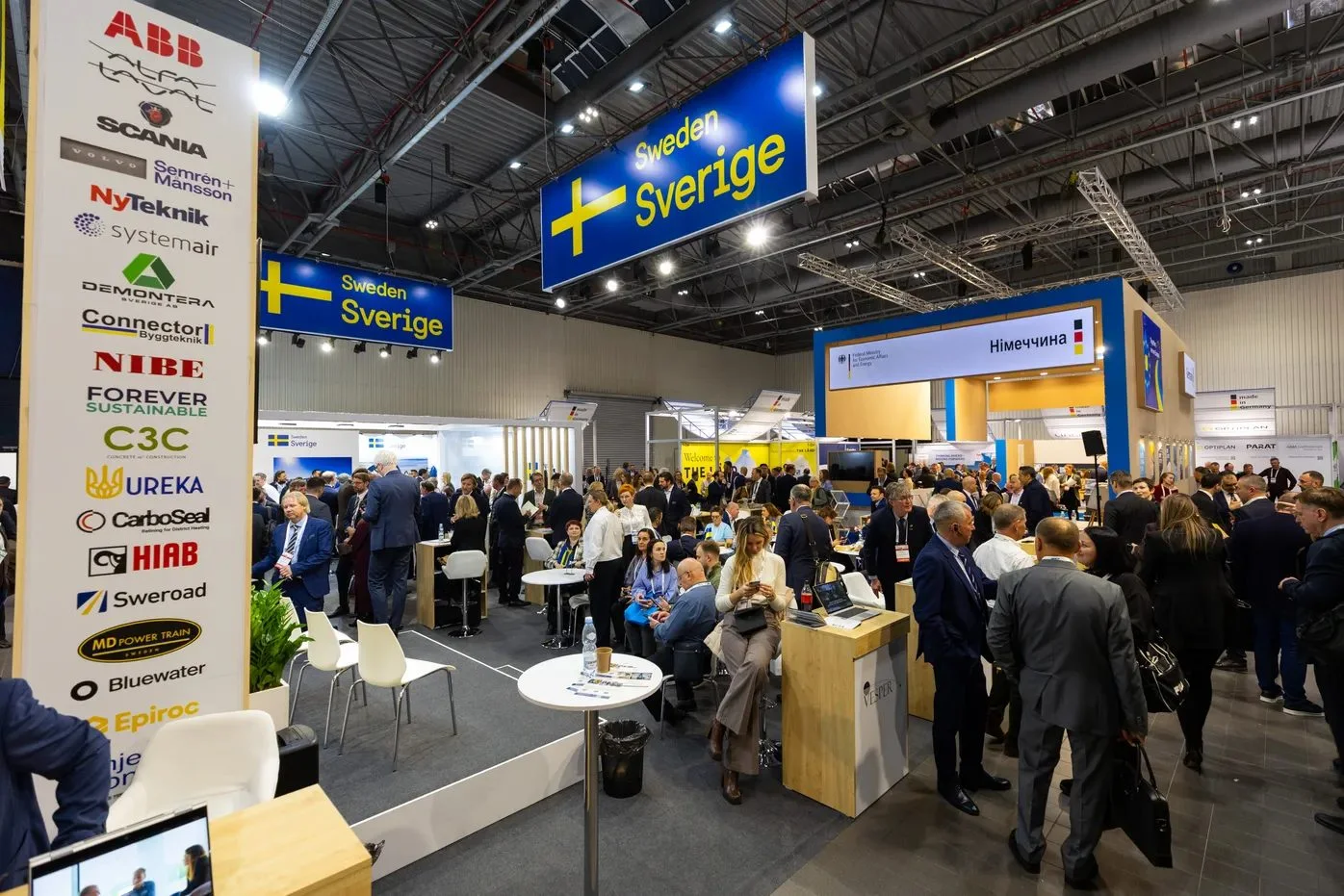
Trade fairs are a good way to start a conversation and a weak way to sustain one. The memory of a company that appeared at an event in March fades around June. Events pay off when someone keeps contact alive between them: coming back with something concrete, reminding people of what was agreed, arranging a conversation away from the show floor. Without that, every next event starts from introductions again.
How is a partner on the ground different from an agency?
An agency delivers contacts and activity: campaigns, lists, meetings. A partner on the ground holds the conversations personally, owns the relationship and the outcome of what was agreed, and finishes by handing over a working process rather than a report. With an unconfirmed customer profile an agency generates traffic that does not convert, because the problem sits in the assumptions, not in the volume of contacts.
How do you find and vet a B2B partner in Poland?
Sources that actually work: industry chambers and clusters, sector conferences, LinkedIn with a message in Polish, referrals from people you are already talking to. Verification before the meeting: KRS (structure, representation, filed accounts), the VAT white list, and VIES for intra-EU transactions. It takes a few minutes and removes the most common problems.
How long does B2B market entry take?
From decision to first contract is usually 6–12 months, and in long-cycle sectors such as energy or infrastructure 12 to 24 months. The validation stage itself is 8–10 weeks. Companies that budget three months withdraw exactly at the point where relationships start to pay off.
Is market analysis needed at all if conversations decide?
Yes, but as a tool for forming hypotheses, not for making the decision. Without analysis you do not know who to talk to or what to ask, and twenty random conversations produce a random picture. The right order is analysis, hypotheses, conversations, decision. Analysis alone ends in a report. Conversations alone end in anecdotes.
13Sources
Sources and verification tools
- KRS company search, Polish Ministry of Justice: ownership structure, legal representation, filed financial statements.
- VAT taxpayer white list, Polish Ministry of Finance: VAT status and the bank account to pay into.
- Biznes.gov.pl: legal forms of doing business, company registration, formal obligations.
- PAIH, Polish Investment and Trade Agency: sector data and support for foreign investors.
- Statistics Poland: data on the number and structure of companies by sector.
Related pages: Poland market entry, business strategy, B2B sales development, business plan.
One last thing
Start with a question, not with a report
If entering a new market is ahead of you, first write down four sentences that have to be true for it to make sense. Then find twenty people who work that market and test those sentences in conversation with them. That is the whole method, and you can run it yourself.
If you would rather talk those assumptions through with someone who has held those conversations in the Polish market, get in touch.
Dima V. Nechyporenko
Entrepreneur and business advisor, founder of the nech. Works with B2B companies on strategy, market entry and sales development in Poland, the European Union and beyond. Project experience spans Poland, Ukraine, EU countries, Canada and the United Arab Emirates, in the energy, industrial and construction sectors.