The French Nuclear Ecosystem: A Blueprint for the Global Supply Chain Opportunity
Key points
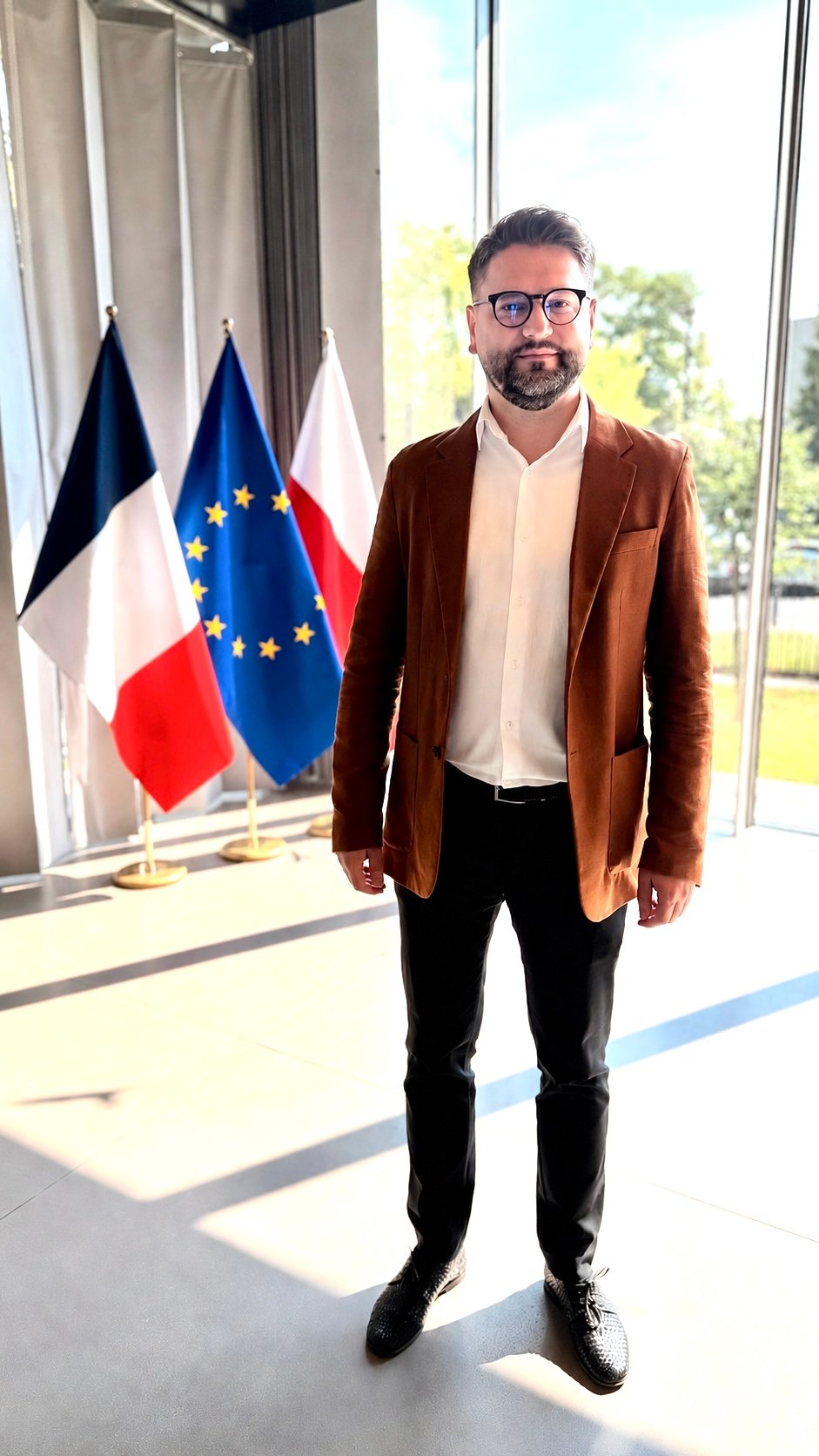
- On 1 July 2026 Dima V. Nechyporenko from the nech attended the Nuclear Economic Meetings at the French Embassy in Warsaw.
- The core insight travels beyond any single country: a nation’s edge in nuclear is not the reactor, it is the ecosystem. France counts around 250,000 jobs and more than 2,200 companies across the value chain.
- As the global nuclear renaissance accelerates, national programmes are opening supply chains through local-content rules, a concrete opening for SMEs everywhere. Poland’s PPEJ, with 40 to 50 percent binding local content, is a live example.
- The takeaway for any SME: the advantage goes to firms that map themselves onto the value chain and certify early, before tenders open.
On 1 July 2026, Dima V. Nechyporenko, a business consultant with the nech, represented our firm at the Nuclear Economic Meetings: Hauts-de-France x Poland at the French Embassy in Warsaw. The event brought together the French and Polish nuclear industries, but the questions it raised apply to almost every country now weighing new nuclear: how a mature supply chain is built, and where domestic companies fit into it.
Below we share the observations Nechyporenko took away, seen through the eyes of a consultant whose central question is not whether nuclear happens, but how small and mid-sized companies can realistically benefit from it.
This was not a debate about vision. It was a conversation about contracts: who, with whom, for what scope, and when. That concreteness is what struck me most. Dima V. Nechyporenko, the nech
A reactor is not a construction project. It is an industry for generations
When people hear “nuclear power plant,” they usually picture a single site. As Nechyporenko notes, that mental shortcut is exactly what costs companies real opportunities, and it applies just as much in London, Ottawa or Abu Dhabi as it does in Warsaw. The French presenters laid out hard numbers, and the scale reframes the entire conversation.
The ecosystem around EDF alone counts more than 247,000 employees and over 3,000 companies, more than half of them active in export markets. This is not a single investment. It is a branch of the economy that lives for decades and generates demand for engineering, manufacturing, maintenance, training and services long after the first reactor comes online.
If you look at a nuclear programme as a single construction contract, you miss 90 percent of the opportunity. Dima V. Nechyporenko
Owning the whole value chain equals sovereignty
The slide that, as Nechyporenko recalls, stayed with him longest carried one idea: the French nuclear industry covers the entire value chain, and that translates into sovereignty.
On the power-plant side: R&D, engineering, manufacturing and construction, operation and maintenance, waste management, decommissioning. On the fuel-cycle side: conversion, enrichment, fuel production, conditioning, reprocessing. Almost every one of these stages happens inside France, with only uranium mining located abroad.
That is the crux. France did not simply buy nuclear technology, it owns it at every stage. This is why, during the “nuclear renaissance” launched in 2022, it can build 6 new EPR2 reactors (the first in 2038) with an option for 8 more by 2050, extend the life of existing units beyond 60 years, and develop small modular reactors, all resting on its own companies.
EDF presented how this works in practice as an integrated “one-stop shop”: Framatome for the nuclear island, Arabelle Solutions for the conventional island, Edvance for design, CNEPE for engineering, Bouygues for construction. Rather than a fragmented consortium, one coordinated team spanning the full chain. This is the model most countries entering nuclear are trying to import, and it is the model in which foreign SMEs can find a place.
Poland as a live case study for the rest of the world
Poland offers one of the clearest current examples of how these openings appear. Its programme (PPEJ) targets two power plants with a combined 6 to 9 GW, based on proven Generation III(+) reactors. The first is being built at Lubiatowo-Kopalino: on 31 March 2026, PEJ filed a construction licence application (the country’s first since 1989, more than 40,000 pages), and the regulator issued a positive opinion on the Preliminary Location Report. When the public consultation of the updated PPEJ closed on 24 June 2026, of 1,055 submissions, none were negative.
Two numbers matter most for businesses, and they generalise well beyond Poland.
The first is local content. Poland’s programme sets a minimum of 40 percent local content on the first unit, 45 percent on the second and 50 percent on the third, intended as a binding element of the EPC contract. Local-content requirements like these are becoming standard in new-build programmes worldwide, turning a policy goal into a contractual obligation that vendors must fulfil with domestic suppliers.
The second is that a supplier base rarely starts from zero. Around 120 Polish companies already have nuclear experience and supply plants across the EU, as well as projects in Ukraine, Canada, Mexico, Japan, India, China and the USA. In most countries, some firms are already wired into the global chains of players such as ABB, Alstom, EDF, GE, Hitachi, Schneider Electric, Siemens and Westinghouse. The question is which companies recognise it in time.
What the event suggests for SMEs anywhere
Nechyporenko, who works day to day with small and mid-sized companies on strategy and market entry, drew three observations that hold across borders.
- Position in the value chain is everything. A specific competence, welding, automation, machining, logistics, environmental services, training or IT, maps to a defined stage of a programme. Technology vendors are not looking for “local companies” in general, but for Tier 3, 4 or 5 suppliers for a defined scope.
- References and certifications earned early build the advantage. Experienced suppliers usually gained their track record servicing plants abroad. Quality, safety classification and physical protection are barriers to entry, and the advantage at tender time belongs to firms that started meeting them ahead of the curve.
- Export is built into this market. In the French ecosystem, more than half of the companies export, and more than half of that export goes outside Europe. A seat in one national programme is often a point of entry to a global market worth tens of billions of euros a year.
The bottom line: countries buy reactors, but the winners build ecosystems
The biggest lesson from the event is strategic, not technical. France did not build nuclear power by buying reactors. It built it by creating an ecosystem, a network of companies, skills, vocational schools (it trains more than 10,000 people a year for the renaissance alone), financing and exports that sustains itself for decades.
Every country now entering nuclear faces the same choice, and the same opening. An ecosystem does not appear on its own. It emerges from the decisions of hundreds of small and mid-sized companies that understand, in time, where their place is. That window opens well before the first tenders are announced.
Frequently asked questions
Why is nuclear considered an ecosystem rather than a single project?
A nuclear programme generates demand across an entire value chain: R&D, engineering, manufacturing, construction, operation and maintenance, waste management, decommissioning and the fuel cycle. France’s sector supports about 250,000 jobs and more than 2,200 companies, showing that a reactor is a decades-long industrial branch, not a one-off build.
How big is the French nuclear ecosystem?
France operates 57 reactors (63 GWe), supports around 250,000 jobs and includes more than 2,200 companies across the value chain. The ecosystem around EDF alone counts more than 247,000 employees and over 3,000 companies.
What is local content in a nuclear new-build programme?
Local content is the share of a project delivered by domestic suppliers. In Poland’s PPEJ it is set at a minimum of 40 percent on the first unit, 45 percent on the second and 50 percent on the third, and is intended as a binding element of the EPC contract, so the vendor must fulfil it with local firms.
How can an SME enter the nuclear supply chain?
Entry usually involves matching a specific competence to a defined stage of the value chain, obtaining references and safety certifications early, and positioning as a Tier 3 to 5 supplier for a defined scope. Because local content is often contractually mandated, companies that prepare ahead of tenders hold a durable advantage.
Exploring the nuclear supply chain, or another large B2B market?
At the nech we help small and mid-sized companies build strategy, map opportunities and enter new markets, practically, without corporate theory.
Book a free consultation →Dima V. Nechyporenko
Business consultant with the nech. International experience across Poland, Ukraine, the EU, Canada and the UAE. Helps small and mid-sized companies with strategy, B2B sales development and expansion into new markets.