Entering new markets
PAIH Business Forum: three days that narrow your market shortlist

The PAIH Business Forum is the one event in Poland where, in three days, you can sit down face to face with representatives of dozens of Polish trade offices from around the world, with no entry fee and no intermediaries. For a company weighing up Canada, the United States, the Middle East or another EU market, it is the cheapest way to test your assumptions before spending a single złoty.
What is the PAIH Business Forum?
The PAIH Business Forum is an annual, free event run by the Polish Investment and Trade Agency for small and medium-sized companies. The sixth edition took place on 5–7 November 2025 at the PGE Narodowy stadium in Warsaw and drew more than 5,000 registered participants, 57 Foreign Trade Office stands and 18 Regional Trade Office stands.
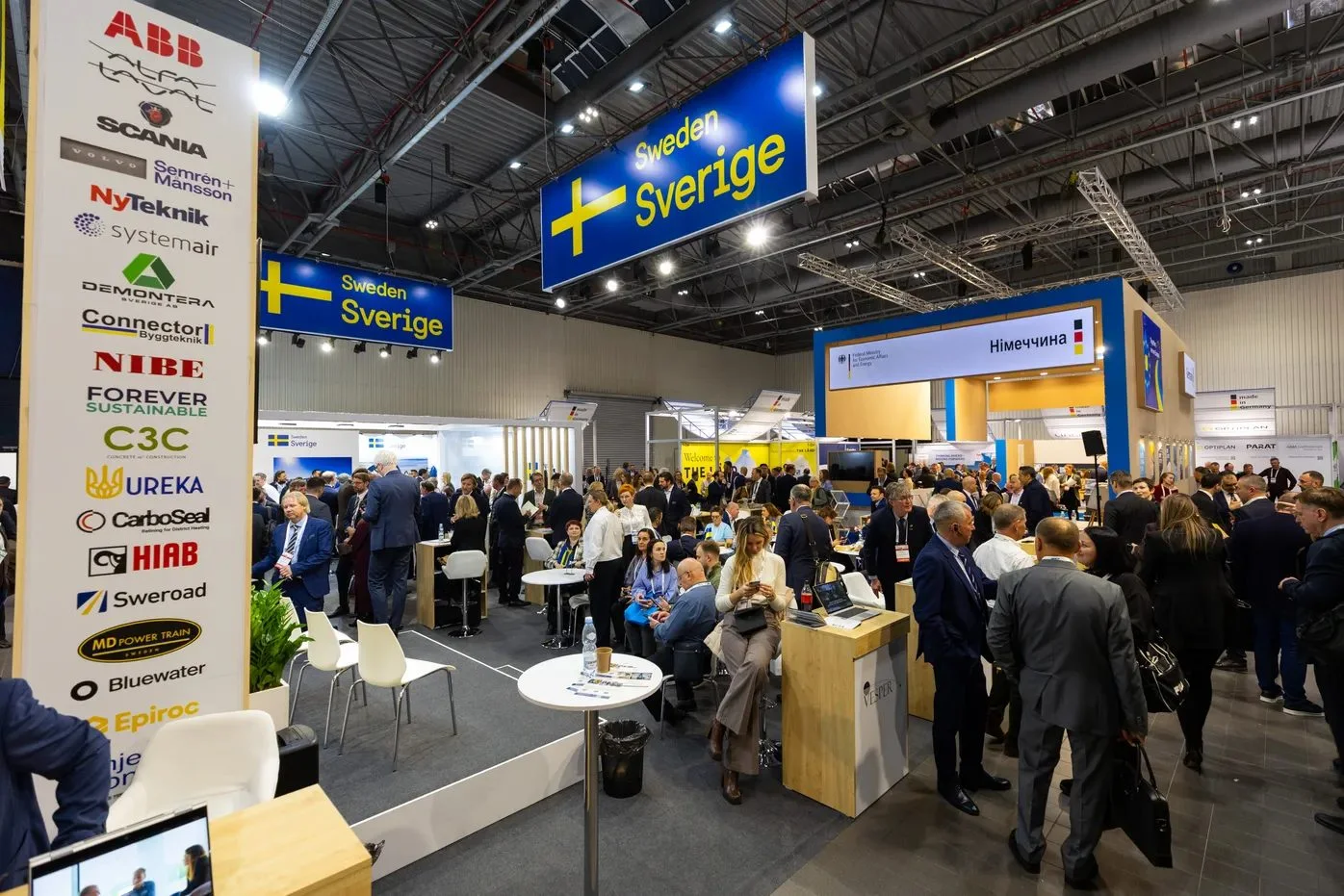
The format is simple: one hall where Polish trade offices from dozens of countries stand side by side, rooms with panels and workshops, and a meeting area. All the value sits in the first element. In one place, over three days, you can ask the same question about your product to people who work day to day in Toronto, Riyadh, Stockholm and Nairobi. Outside the forum, every one of those conversations means a separate email, separate scheduling and several weeks of waiting.
The scale of the sixth edition, according to the organiser: 57 foreign trade office stands, 18 regional office stands, 17 partner stands, 90 panels and talks, plus 3,000 booked meetings with foreign office representatives and 120 with regional offices. Experts covered more than 70 foreign markets.

Who runs the event
The organiser is the Polish Investment and Trade Agency (PAIH), the state body responsible for export support and inbound investment. It runs a network of Foreign Trade Offices covering more than 70 markets and eighteen Regional Trade Offices across Poland. The forum is the one point in the year when that entire network gathers in a single building.
One thing worth saying plainly for international readers: this network serves companies registered in Poland, and that includes foreign-owned entities. If you have a Polish subsidiary or you have set one up as part of your European expansion, the trade office support and the forum are open to you on the same terms as to any local manufacturer.
The sixth edition was divided into sector series, market series and practical workshops. Sectors included rail, the energy transition, deep tech and cosmetics. Markets included a “Go West” block on the United States, an Asian block and a block on emerging markets covering Central Asia, the Middle East and Africa. Workshops covered funding instruments and applied artificial intelligence in companies.
When is the PAIH Business Forum 2026?
As of 27 August 2026, the date of the seventh PAIH Business Forum has not been announced publicly. The sixth edition ran on 5–7 November 2025 and registration for it opened on 20 October 2025, roughly two weeks before the event. The agency calendar is worth checking from early October onwards.
This is a real scheduling trap, which is why we are writing about it this early. The registration window opens late and closes fast, and the number of slots for meetings with specific trade offices is limited. A company that starts thinking about the forum when the date is announced has two weeks to choose markets, prepare English-language materials and decide who is travelling. That is not enough time for the conversations to be worth anything.
The practical recommendation: start the preparation work in September, whether or not the date is known. If the edition moves to another month or does not happen, the material you prepared stays in the company and still earns its keep in a conversation with a Regional Trade Office or at a sector trade fair.
Official sources to watch: the event website and the PAIH events calendar.
How much does the PAIH Business Forum cost?
Participation in the PAIH Business Forum is free of charge and only online registration is required. The organiser states this directly on the event website. The only real cost on the company side is your team’s time plus travel and accommodation for people coming from outside Warsaw, which is not comparable to a scouting trip to a non-European market.
It is worth setting that against the alternative. A scouting visit to a single market outside Europe means flights, hotels, often an interpreter and several days of two people’s time, and you still have to arrange the meetings from Poland first. A market report commissioned from a research agency costs less than the travel, but it answers questions someone framed without knowing your product.
The forum does not replace either of those. What it changes is the order of spending: first a few hours of conversation that eliminate two or three directions from the list, then money spent on the one that survived.
“The most expensive mistake in entering a new market is not a bad decision. It is a decision made without talking to someone who actually lives in that market. The forum removes the excuse that there was no way to have that conversation.”
Dima V. Nechyporenko, the nech
Why Polish exports need market diversification
In the first half of 2026 Poland exported goods worth 812.4 billion PLN, up 4.6 percent year on year. Developed countries took 87.4 percent of that value, the European Union alone 75.1 percent, and Germany by itself accounted for 26.5 percent of Polish exports.
Those three numbers describe a risk that rarely gets discussed at the level of an individual company. A quarter of the country’s entire export volume depends on the business cycle of one neighbour. The ten largest partners account for 66.2 percent of exports. Developing countries, which is where demand grows fastest, make up just 7.9 percent.

At the level of a single B2B company the concentration looks even sharper. The typical Polish manufacturer we work with has two or three large buyers, all within a thousand kilometres, and an order book tied to a single investment cycle. When that cycle stalls, everything falls at once.
Diversification does not mean abandoning Germany. It means building a second and a third direction over two years, one that covers fixed costs in a bad year. Choosing those directions is a strategic decision, and that is exactly the stage where the forum is useful, not the stage where you are hunting for a specific customer.
We set out that logic in more detail in our piece on entering a new market and on the market expansion strategy service page.
What does a Foreign Trade Office meeting give you?
A PAIH Foreign Trade Office is a team based in the country itself, familiar with local buying behaviour and regulation. At the 2025 forum the most heavily booked offices were Germany, Switzerland, France, Sweden, Saudi Arabia, the United Kingdom, Ireland, the United Arab Emirates, Denmark and the Benelux countries.
A conversation with an office like that gives you two things no report will. The first is calibration: whether your product at that price makes any sense in that market, and if not, why. The second is names. Not a list of companies from a database, but a pointer to who specifically is worth writing to and what that person will expect in a first email.
You do need to understand the limits of this help. A trade office is a public institution, not a sales agent, and it is not accountable for the outcome of your negotiations.
| Area | What the office does | What it will not do |
|---|---|---|
| Market scoping | Assesses whether demand for your product is real, flags entry barriers and typical certification requirements | Will not produce a full market study with a sales forecast |
| Contacts | Points to partner types, trade chambers, fairs and specific companies for a first approach | Does not guarantee a reply or a meeting, and does not negotiate on your behalf |
| Counterparty checks | Verifies the basic credibility of a locally registered company | Does not replace commercial intelligence or due diligence before a large contract |
| Market entry | Advises on the presence model, flags support programmes and trade missions | Will not build your sales channel, manage a distributor or answer for results |
| Formalities | Directs you to the right institutions and advisors on tax, customs and labour law | Does not give legal or tax advice and will not incorporate a company for you |
A sense of scale: the whole of Canada is covered by a single office based in Toronto. One team for a country larger than Europe. That is why a conversation at the forum, when that team is in Warsaw and has forty minutes for you, is worth more than three emails sent in November.
Which markets are worth testing at the forum?
The forum is for testing directions you know too little about to decide on, and too much about to dismiss. In practice, for Polish B2B companies that means four groups: North America, the Middle East, the Nordic markets and EU countries outside the top three buyers. Each has a different entry threshold.
| Direction | What to test at the forum | What to watch for |
|---|---|---|
| Canada | Provincial certification requirements, distribution channels, what the CETA agreement means for your product group | A market split along provincial lines, and low recognition of Polish suppliers in many industrial categories |
| United States | Which state, which presence model, what liability insurance, what payment terms | The highest entry cost and the sharpest competition, against the largest single buying market |
| Middle East | The role of a local partner, decision cycles on public projects, local content requirements | Entering without a regional partner usually fails. The Saudi and UAE offices were among the most booked at the 2025 forum |
| Nordic markets | Environmental criteria in tenders, documentation requirements, expectations of a Central European supplier | High quality requirements and a long supplier qualification process |
The rule we apply when building a meeting plan: three conversations about markets already on your shortlist, and one about a market that is not on it. That fourth conversation is usually the one that produces information nobody was looking for, because nobody asked the question.
How to prepare for the PAIH Business Forum
Preparing for the PAIH Business Forum takes about six weeks and has four stages: cutting the market list to three, preparing English-language materials, registering with a meeting plan, and the conversations themselves. Companies that turn up without this go home with a bag of leaflets and nothing agreed.

- Cut the market list to threeChoose on demand data, tariff barriers, logistics costs and competitor presence, not on how much you like a country. Eight directions is not a list, it is the absence of a decision.
- Write one page in EnglishWho you are, what exactly you sell, to whom, in what volumes, what certificates and references you hold. One A4 page, no generalities. This is the document you leave at the stand.
- Fix your price range and termsMinimum order size, lead times, payment terms, production capacity for the next four quarters. Without this the conversation never gets past a company introduction.
- Register in the first weekRegistration is free, but the number of slots at the stands is limited and the busiest offices fill up fast. You register people, not the company.
- Plan five to eight meetings a dayMore than that cannot be done properly. Assign each meeting one question you have to come back with an answer to.
- Send two people, not oneOne runs the conversation, the other takes notes. After eight meetings, one person will not reconstruct who said what, and it is exactly those details that carry the value.
- Write a short note after every conversationFive sentences straight after the meeting, on the spot: who, about what, what was promised, what to check, when to follow up. A note written in the evening loses half its content.
What to ask a trade office representative
The best questions at the forum are specific and about your product, not about the market in general. Instead of “what does the construction market in Canada look like”, ask “who buys steel structures to this specification in Ontario and what certification will they require”. Eight questions that work most reliably follow.
- Who buys this kind of product hereBuyer type, company size, whether the decision is central or local.
- What will they require from a supplier based in PolandCertificates, insurance, local references, service presence.
- How long is a typical buying cycleFrom first contact to order, in months.
- Is our price inside the market rangeAsk directly and give your range. The answer “too cheap” comes up more often than companies expect.
- Which presence model makes sense hereDirect export, distributor, agent, local company.
- What were the recent Polish entries in this sectorWho tried, who succeeded, what sank the rest.
- Which trade fairs and chambers actually workWhich event carries weight and which is a cost with no effect.
- What should we do in the next three monthsThe closing question. The answer gives you a task list instead of impressions.
What the PAIH Business Forum will not do for you
The forum will not bring you a contract. It also does not replace an entry strategy, market research or sales work. It is a tool for one stage: narrowing the list of directions and testing assumptions. Companies that go there hunting for a customer come back disappointed, and that is the most common misunderstanding about this event.
The second thing worth knowing: there are no foreign buyers at the forum. The people there are representatives of Polish institutions working abroad, Polish companies, financial partners and regional authorities. It is a meeting on the Polish side that prepares you for the conversations you will have later, on the ground.
The third: with 90 panels and talks on the programme, their value varies. Some are substantive, some are institutional presentations. If you have three days, the priority is conversations at the stands, not the conference room. Review the panel programme in advance and pick at most two talks a day.
“The value of the forum is not what you hear from the stage. It is what you hear at a stand from someone who flies back to Riyadh or Toronto next week.”
Dima V. Nechyporenko, the nech
What to do in the 14 days after the forum
The value of the forum is created in the two weeks after it, not during it. In that window you have to consolidate the notes, message every person you spoke to and make one decision: which market goes into next year’s plan. Without that step, three days of your team’s work turn into a cost.
- Days 1–2: one table from all the notesMarket, contact, key finding, action, deadline. All in one file, available to the whole team.
- Days 3–5: message every contactShort, in English or Polish, with a reminder of the context and one specific question. A message sent two weeks later performs far worse.
- Days 6–10: verify what you were toldTwo or three findings checked independently, in customs data, with a trade chamber or with a logistics provider.
- Days 11–14: decision and budgetOne market to enter, one to watch, the rest drop out. Assign the chosen direction a budget and a named owner.
Who should skip the forum
Attending the PAIH Business Forum makes no sense for companies with no spare production capacity, no materials in English, or no clear answer to what exactly they sell. In those three cases three days in Warsaw will change nothing, and the work sits somewhere else entirely.
We also advise against it for companies in the middle of an ownership change or a financing restructure. International expansion needs a stable base for at least eighteen months, and conversations held without certainty about who decides tend to collapse at the first order.
A separate category is service businesses whose offering requires local presence and local licensing. Here a trade office conversation has informational value, but the real entry plan starts with regulatory questions, not commercial contacts.
Where the forum fits in a market entry plan
The PAIH Business Forum belongs to the second of four stages of entering a new market: after you have a long list of directions, and before the entry decision. The job of this stage is getting from eight directions down to one, based on conversations with people working on the ground rather than on data alone.

Stage one is data: where the demand is, what the tariffs and barriers are, who already sells there. Stage two is conversations, which includes the forum. Stage three is the decision, with a budget and a presence model. Stage four is execution: a partner, first orders and after-sales support.
The stage companies skip most often is the second, because it feels soft and hard to account for. That is an expensive mistake, because data shows you the size of a market but not why the three previous Polish companies in that sector pulled out after a year.
If you want to run this process inside your own company, we deliver it as an advisory project. The starting point is usually business strategy, and part of the execution is B2B sales development in the chosen market.
Frequently asked questions about the PAIH Business Forum
Is there a fee to attend the PAIH Business Forum?
No. The organiser states directly that participation in the event is free of charge, with online registration required on the event website. The cost on the company side is your team’s time plus travel and accommodation for people coming from outside Warsaw.
Where does the PAIH Business Forum take place?
The sixth edition was held at the PGE Narodowy stadium in Warsaw on 5–7 November 2025. The venue for future editions is confirmed by the organiser when the date is announced, so check the official event website before booking accommodation.
Can a foreign-owned company registered in Poland take part?
Yes. PAIH support is aimed at companies registered in Poland, and ownership abroad does not exclude you. If you run a Polish subsidiary as part of your European expansion, the trade office network is available to you on the same terms as to a local manufacturer.
How many meetings can you realistically hold in a day?
Five to eight conversations a day, if each one is to have a purpose and be written up. During the 2025 edition, 3,000 meetings with foreign trade office representatives were booked across the three days.
Is it worth going without a market already chosen?
Yes, on one condition: that you have narrowed the list to three or four directions. The forum is for narrowing a list, not for creating one. Arriving with no hypothesis at all ends in collecting materials and deciding nothing.
When does registration for the next edition open?
In 2025 registration opened on 20 October, about two weeks before the event. As of 27 August 2026 the date of the next edition had not been announced, so the PAIH calendar is worth checking from early October.
Planning a market entry in 2027?
We help B2B companies narrow the list of directions, prepare the materials and the conversations before events like the PAIH Business Forum, and then take the chosen market through to first orders. The first call is free and takes about thirty minutes.
Book a consultation See the serviceRelated reading
Sources
- Official PAIH Business Forum website: participant, stand, panel and meeting figures, and the statement that participation is free. Accessed 27 August 2026.
- Polish Investment and Trade Agency, PAIH Forum Biznesu 2025 and the summary of the sixth edition, November 2025.
- Statistics Poland, foreign trade turnover, first half of 2026, preliminary data.
- Polish Investment and Trade Agency, Foreign Trade Office network.
Author: Dima V. Nechyporenko, B2B business advisor and founder of the nech. Works with companies across Poland and Europe on strategy, market entry and B2B sales development. Experience across Poland, Ukraine, the European Union, Canada and the Middle East.